 CalcElf
0.8 m rope, 64 N limit: the breaking speed
A ball of mass 1 kg on a smooth horizontal table moves in a circle at constant speed on a string 0.8 m long; the string can stand a maximum tension of 64 N. Find the speed of the ball when the string is just about to break.
Step-by-step
- T = mv²/r → v = √(Tr/m) = √(64×0.8/1) = 7.1554The rope's tension provides the centripetal force; it snaps at maximum tension
Why it works
The tension is the centripetal force, T = mv²/r, so a longer radius needs a smaller speed for the same tension, while a heavier ball or a stronger string changes the limit in proportion.
Common mistakes
- Thinking a longer string breaks at a higher speed, when the required force actually falls as r grows.
- Using T = mv²r and multiplying by the radius instead of dividing.
Related
circular-rope-1m-25n-1kg circular-rope-0-5m-36n-2kg circular-rope-2m-100n-0-5kg
Stage diagrams
Set up 1 — 0.8 m rope, 64 N limit: the breaking speed
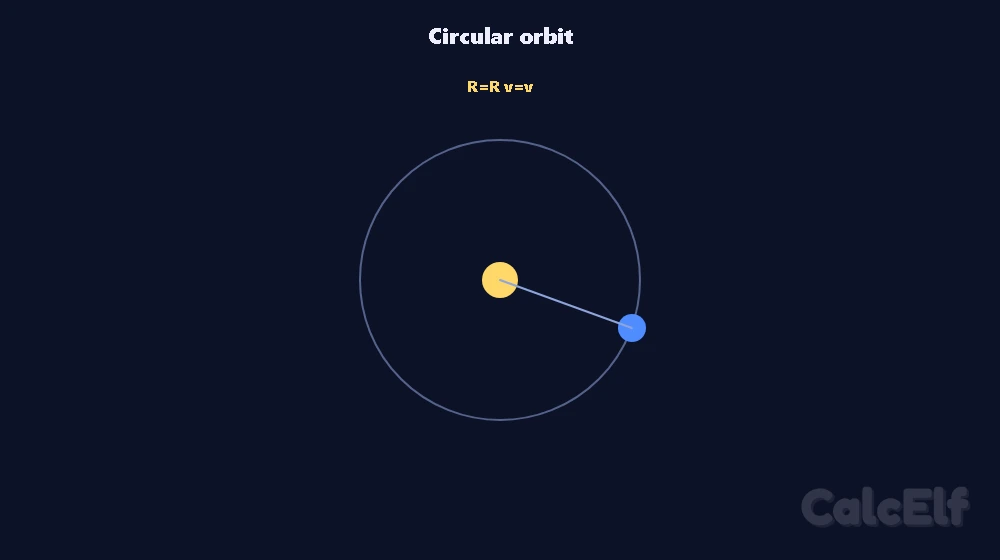
Stage 1 — Set up: Read the problem and mark the given values and the target. 0.8 m rope, 64 N limit: the breaking speed
The tension is the centripetal force, T = mv²/r, so a longer radius needs a smaller speed for the same tension, while a heavier ball or a stronger string changes the limit in proportion.
Work the relation 2 — 0.8 m rope, 64 N limit: the breaking speed
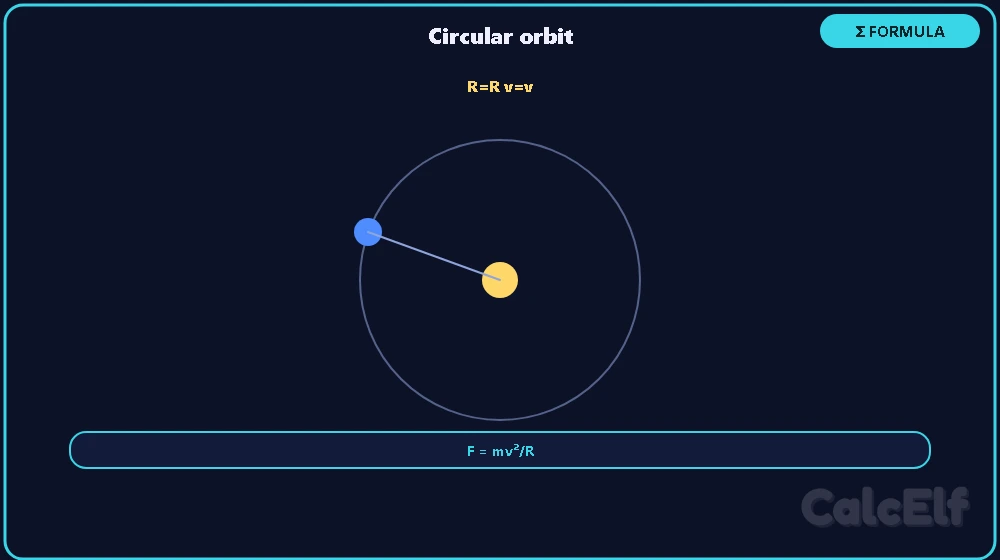
Stage 2 — Work the relation: T = mv²/r → v = √(Tr/m) = √(64×0.8/1) = 7.1554
The tension is the centripetal force, T = mv²/r, so a longer radius needs a smaller speed for the same tension, while a heavier ball or a stronger string changes the limit in proportion.
Conclusion 3 — 0.8 m rope, 64 N limit: the breaking speed
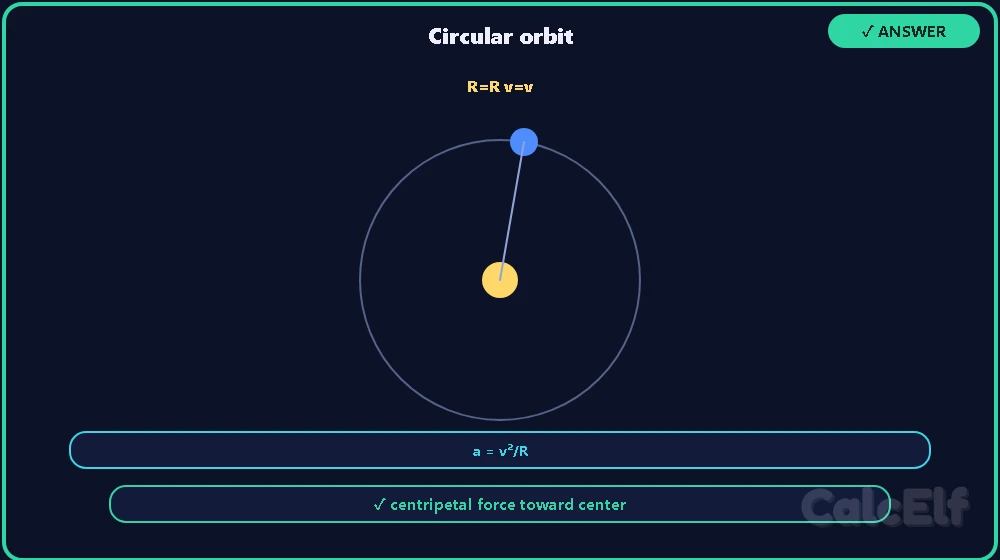
Stage 3 — Conclusion: T = mv²/r → v = √(Tr/m) = √(64×0.8/1) = 7.1554.
The tension is the centripetal force, T = mv²/r, so a longer radius needs a smaller speed for the same tension, while a heavier ball or a stronger string changes the limit in proportion.